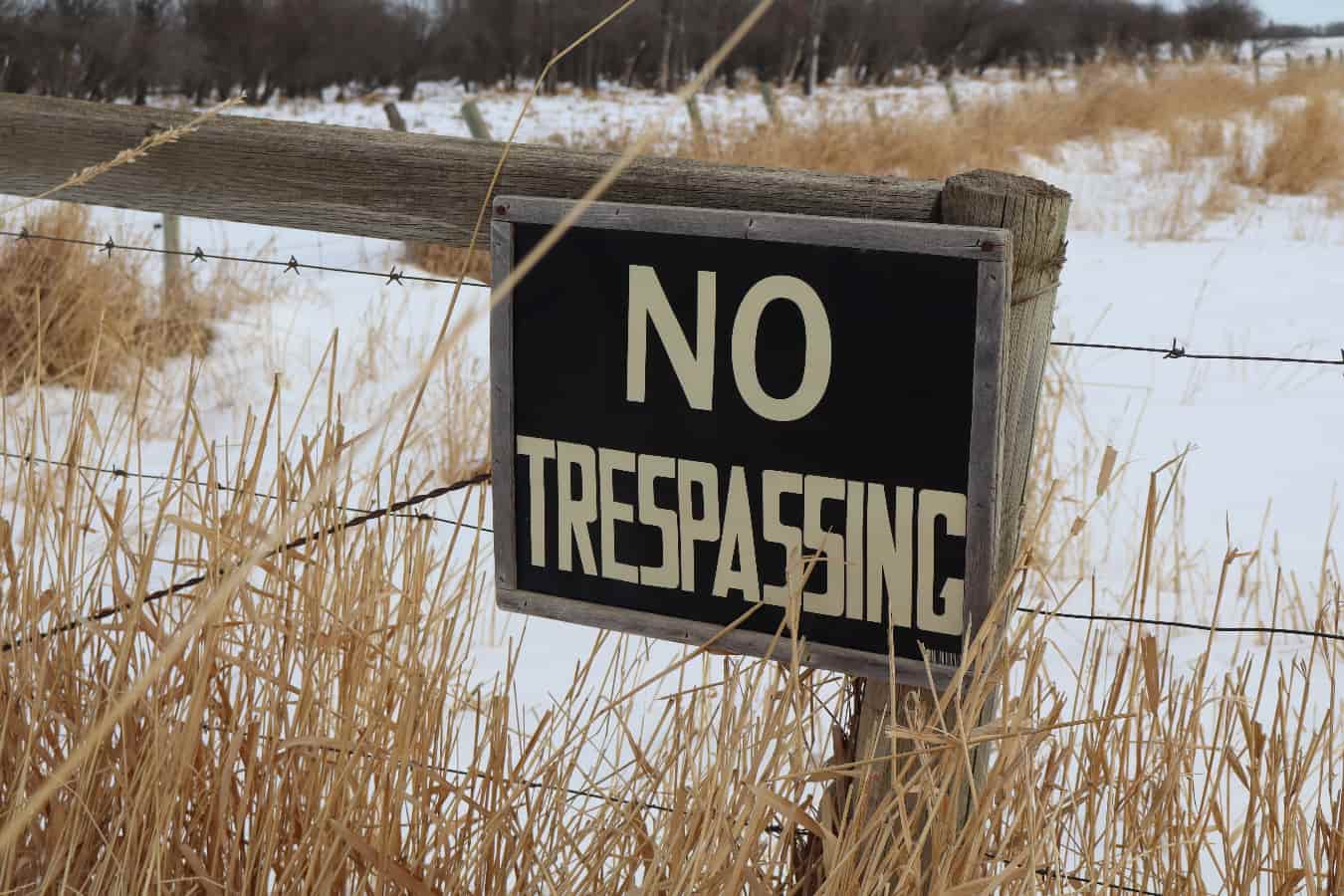
Wyoming’s effort to codify corner crossing into state statute is dead. Montana’s parallel push will not reach the legislature till 2027 at the earliest. Together, the 2 states demonstrate how far the West stays from dealing with a concern that straight identifies where anglers and hunters can lawfully go.
Corner crossing describes stepping from one parcel of public land to another at the single point where 2 public parcels fulfill diagonally– without physically touching the personal land that fills the other 2 corners of that crossway. The practice is the only method to reach countless acres of federal and state ground in the West, where a 19th-century railway land-grant system left public and personal land interlocked in a checkerboard pattern. Landowners have actually argued that crossing at a shared corner makes up trespass through their airspace; public land supporters counter that no personal ground is touched and no damage is done. The U.S. Court of Appeals for the 10th Circuit agreed the supporters, and when the U.S. Supreme Court decreased to hear a landowner’s appeal in October 2025, the judgment ended up being settled law in Wyoming, Colorado, Utah, Kansas, Oklahoma, and New Mexico– however left Montana and other states outside the 10th Circuit in legal limbo.
Wyoming’s Home Costs 19, which would have composed the 10th Circuit Court of Appeals’ corner-crossing judgment into state statute and opened some 2.4 million corner-locked acres for public gain access to, passed your house 47-15 in February before collapsing on the Senate flooring in a 27-4 vote previously this month. The bill’s collapse came not from straight-out opposition to corner crossing– the 10th Circuit settled that concern in Wyoming and 5 other states– however from a waterfall of completing changes that made the legislation unfeasible. Conflicts over whether state trust lands ought to be consisted of, how an unmarked corner must be lawfully specified, and who bears obligation for understanding a crossing point stands turned an 85-word expense into a procedural tangle. Sen. Costs Landen, who had actually shepherded the procedure through committee, acknowledged what the vote implied. “If this expense goes silently to rest this night,” he stated, “I want whoever well who’s going to take this up in the future, since it’s not disappearing.”
The useful outcome for Wyoming anglers and hunters is the same however clarified: corner crossing stays legal under federal case law, however without a state statute to back it up, police still does not have a basic response when a grievance is available in. The 10th Circuit choice was a win. A statute would have been clearness. Wyoming does not have it.
Montana never ever had either. Due to the fact that the state beings in the 9th Circuit instead of the 10th, the federal judgment does not use there at all, and corner crossing stays formally illegal under state assistance from Montana Fish, Wildlife and Parks. As MidCurrent reported last month, approximately 871,000 acres of Montana public land are corner-locked– parcels that can just be reached at the point where 2 checkerboard areas of public ground fulfill, surrounded on all sides by personal holdings. Montana’s legislature fulfills in routine session just in odd-numbered years, so any expense should wait on the 2027 session.
That hasn’t stopped Sen. Ellie Boldman of Missoula and Rep. Josh Seckinger of Bozeman– co-chairs of the Montana Legal Sportsmen’s Caucus– from preparing. In mid-February the 2 revealed their intent to pursue legislation– targeting the 2027 session or a prospective interim committee action– arguing in a Bozeman Daily Chronicle op-ed that the expense would “do one easy thing. It clarifies in Montana law that corner crossing– when no personal land is touched and no home is harmed– is legal.” Seckinger, a fly fishing guide, has actually framed the stakes in terms his customers comprehend straight: gain access to identifies chance, he composed, chance identifies involvement, and involvement funds preservation. A Montana Free Press/Eagleton survey launched March 5 discovered popular opinion securely on their side–roughly 60 percent of Montanans favor legalization, with assistance holding throughout celebration lines: 65 percent of independents, 63 percent of Democrats, and 53 percent of Republicans. A comparable expense stopped working in the Montana Home in 2013 after drawing busloads of blaze-orange-clad sportspersons to the Capitol.
Wyoming’s Senate vote is useful for what Montana deals with in 2027. Wyoming had the 10th Circuit judgment on its side, bipartisan assistance, and a costs that many legislators concurred just shown existing law– and still could not endure the modification procedure. Montana has strong public assistance and a guide-turned-legislator primed to bring the expense, however no beneficial federal precedent and a minimum of 9 months before the legislature even assembles. Both efforts circle the very same geological fault: a checkerboard land ownership pattern dating to 19th-century railway grants that, missing legal clearness, leaves the concern of who can reach which public land to county lawyers, wardens, and specific danger tolerance.
For the 2026 season, the circumstances vary however the useful assistance is comparable. In Wyoming, corner crossing is legal– the 10th Circuit stated so– however without a statute, some county lawyers and wardens still treat it as objected to ground. In Montana it stays formally illegal under FWP assistance, without any prosecution having actually reached trial in current memory. In both states, anglers and hunters who pick to cross at checkerboard corners do so at their own danger.