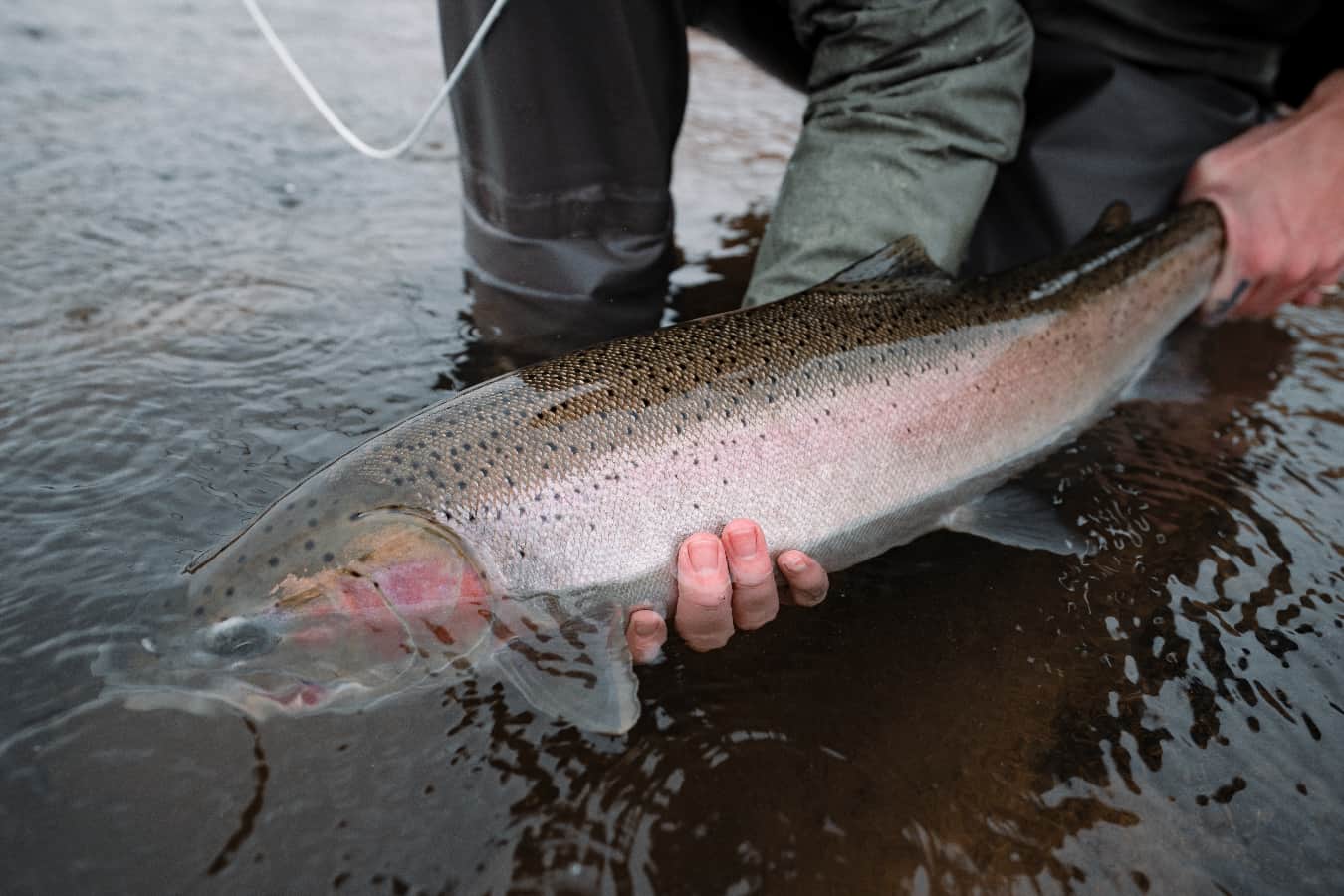
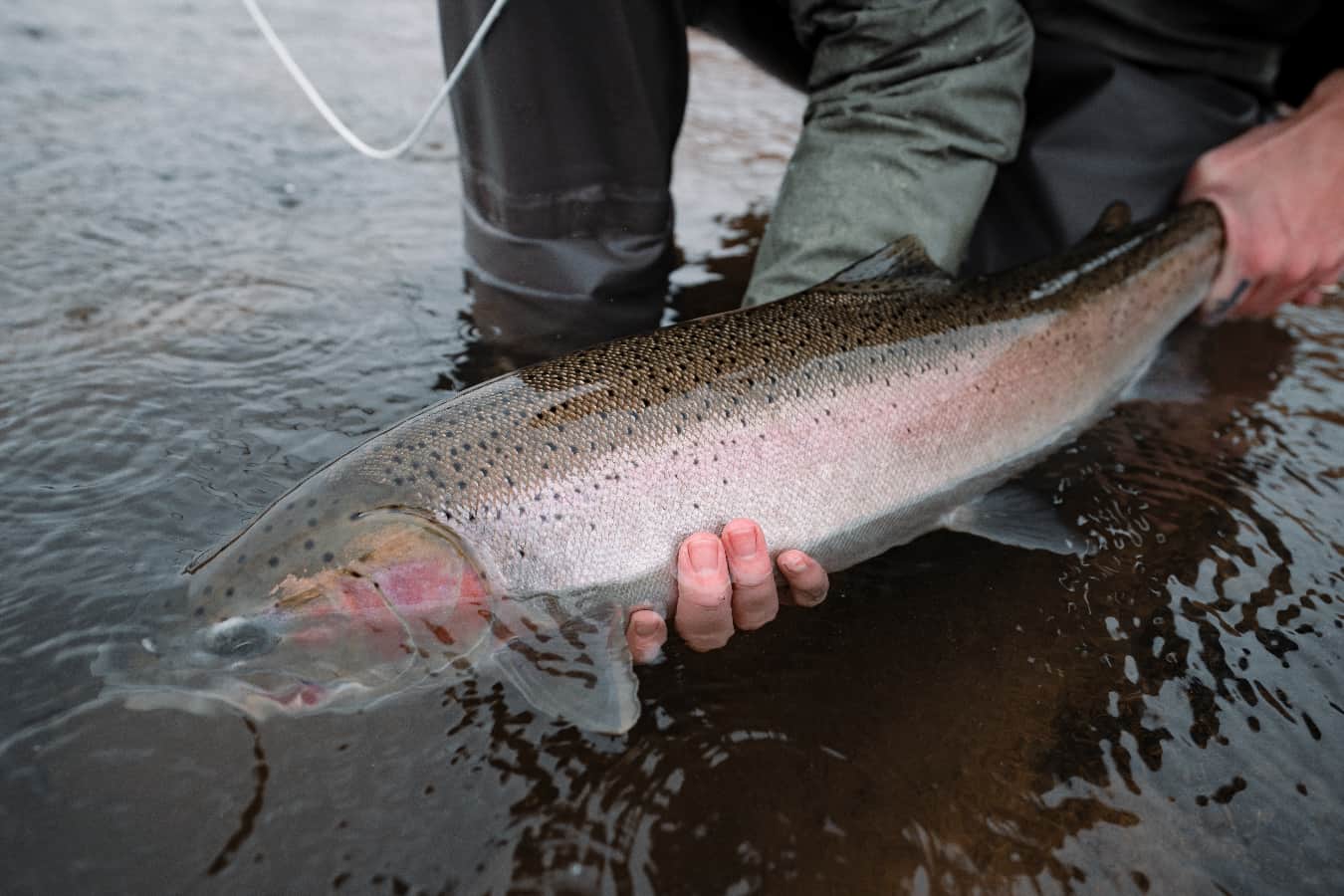
NOAA’s choice not to list OP steelhead under the ESA has preservation groups evaluating legal choices and requiring instant action from state and tribal co-managers– all while the peak of the wild winter season run is underway. Image by Hone Creative
NOAA Fisheries concluded on January 14 that Olympic Peninsula steelhead ( Oncorhynchus mykiss) do not necessitate defense under the Endangered Types Act– even after the company’s own status evaluation group discovered the fish deal with a moderate threat of termination throughout their variety. The choice ends an evaluation set off by a 2022 petition from the Wild Fish Conservancy and The Conservation Angler, however it has actually not ended the argument over what must take place next.
The finding landed in the middle of a stuffed minute. Overall winter-run steelhead abundance in the 4 biggest Olympic Peninsula basins– the Hoh, Queets, Quinault, and Quillayute– has actually dropped approximately 42% from the early 1990s to the 2018– 2022 duration,according to NOAA’s FAQ on the status review Smolt-to-adult survival has actually fallen considering that the 1980s. Summer-run populations are so diminished they hardly sign up in keeping track of information. And the status review team’s own risk assessment evaluated that OP steelhead were most likely than not to reach high termination threat within a 40- to 60-year window.
NOAA acknowledged all of that– then indicated the fish’s ongoing spatial circulation, staying environment quality, and current management modifications by the Washington Department of Fish and Wildlife and tribal co-managers as factors the population might continue without federal listing.
Preservation Groups Press Back
The Wild Steelhead Coalition called the decision “not an exoneration, however a wake-up call,” keeping in mind that NOAA’s finding stands in sharp contrast to the company’s 1996 evaluation, which discovered no threat of termination. The WSC argued that the federal status evaluation verifies years of cautions about decreasing runs and minimized efficiency, and advised anglers and supervisors to deal with the finding as a required for aggressive voluntary preservation instead of a factor for complacency.
The petitioning companies reacted more dramatically. Wild Fish Conservancy and The Preservation Angler released a joint statement revealing a legal evaluation of NOAA’s choice to figure out whether it lines up with the very best readily available science and the ESA’s statutory requirements. They are assessing all choices, language that in ESA disagreements normally signals prospective lawsuits.
WDFW, on the other hand, framed the result as verification that its existing management structure is working. The company indicated catch-and-release-only policies, barbless-hook requirements, reduced seasons, hatchery reforms, and environment remediation tasks as proof of a conservation-first method. The NOAA finding likewise exposed a WDFW strategy to change the out-of-basin Chambers Creek hatchery program on the Quillayute River with an in your area sourced early winter-run broodstock program, ultimately launching 50,000 smolts every year from the Bogachiel Hatchery.
The Space In Between Finding and Action
A three-part investigative series released February 4 by the Port Townsend Leader took a look at the paradox at the center of NOAA’s choice. The company specified the foreseeable future as 40 to 60 years, recorded a long-lasting down trajectory gotten worse by environment modification, and kept in mind that many status evaluation staff member evaluated the population most likely than not to reach high termination threat within that timeframe. Glaciers that when supported summer season circulations in Olympic Peninsula rivers are predicted to vanish completely by 2070. Ocean environment ideal for steelhead might diminish by as much as 40% in coming years.
Yet NOAA concluded that existing defenses– environment in Olympic National forest, state and tribal harvest limitations, hatchery adjustments– suffice to avoid termination in the meantime.
The state-tribal co-managers had actually pressed hard for that result. In a September 2025 evaluation, WDFW and 7 treaty people argued the status evaluation procedure disappointed congressional requirements for listing, slamming the evaluation group’s analysis as insufficiently grounded in co-manager information. The co-managers competed that NOAA must support their adaptive management method instead of enforce ESA limitations on seaside neighborhoods and tribal fisheries.
What It Suggests on the Water
For anglers heading to the Olympic Peninsula this month– the peak of the wild winter season steelhead operate on the Hoh, Sol Duc, Bogachiel, and Calawah– the instant regulative photo is the same. No ESA-driven closures are coming this season. The existing structure of necessary catch-and-release for wild fish, barbless single-point hooks, no bait, and seasonal closures on having a hard time systems stays in location.
However the federal government’s own researchers have actually now recorded what steelheaders on these rivers have actually enjoyed unfold for many years: less fish, much shorter seasons, more emergency situation closures. The Queets River within Olympic National forest closed early last season after years of missed out on escapement objectives. The Clearwater, Quinault, Humptulips, and Chehalis systems all saw emergency situation shutdowns. Just the Hoh and Quillayute system remained open through completion of the reduced season.
The WSC is advising anglers to embrace strenuous catch-and-release practices, consisting of decreasing dealing with time, utilizing rubber-mesh webs, keeping fish in the water, and thinking about a voluntary “one and done” principles on days when fish are biting. With populations this low, the union argues, every fish that reaches its spawning gravel matters.
Whether those voluntary procedures and the existing regulative structure suffice to reverse the trajectory recorded in NOAA’s own evaluation stays the main concern. The petitioners’ legal evaluation is continuous. The co-managers’ preservation dedications will be checked in genuine time as this season’s run plays out. And the fish, as constantly, will have the last word.