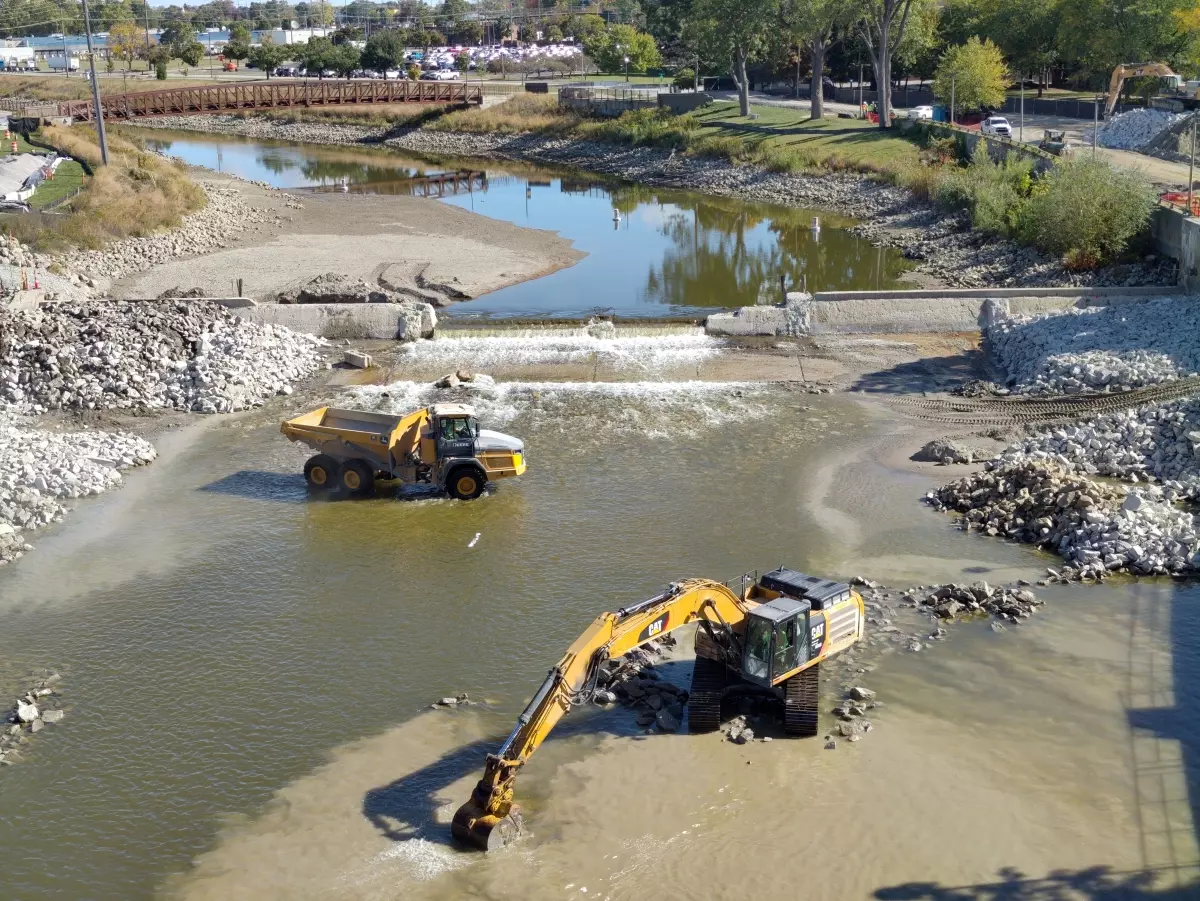
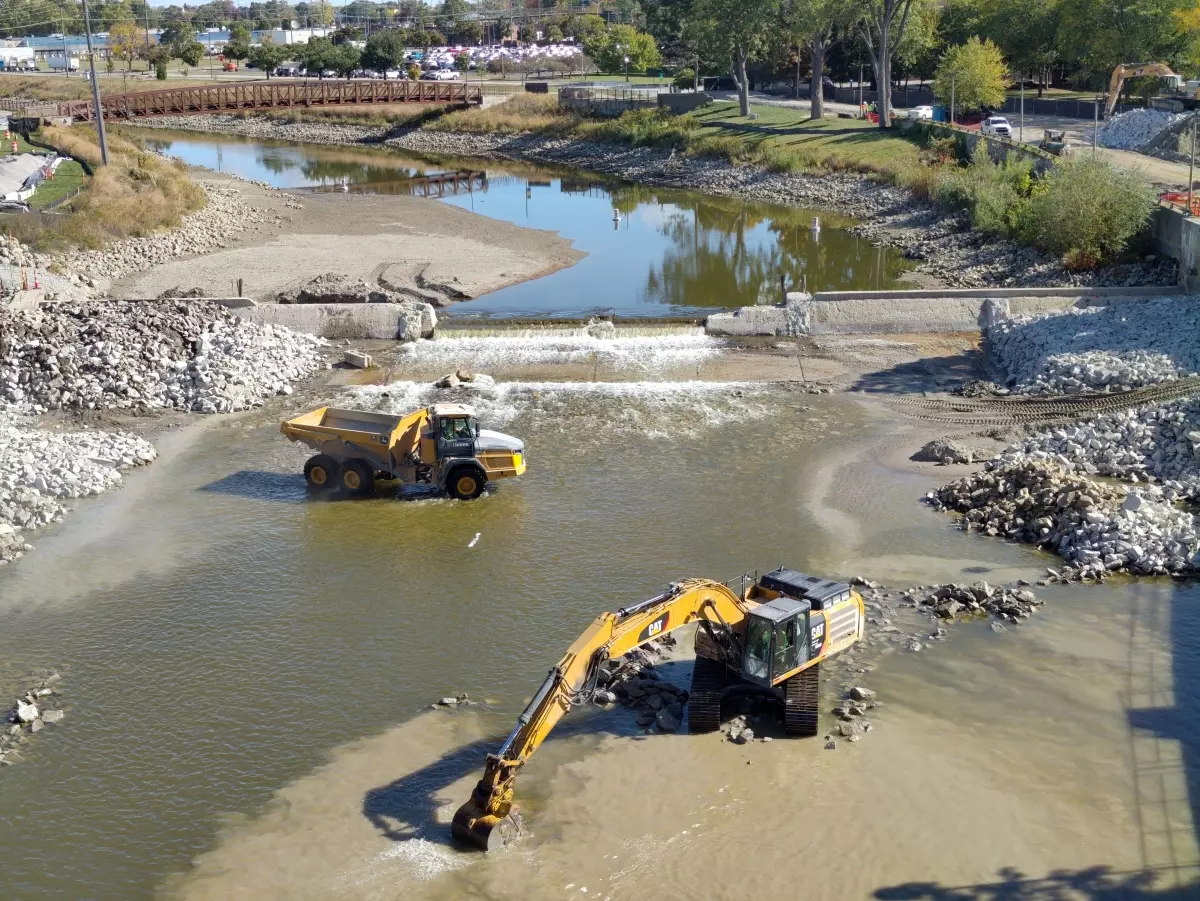
The Army Corps’ 2026 Across the country Authorizations consist of the first-ever standalone authorization for getting rid of barriers to fish migration– however a parallel EPA proposition might restrict states’ capability to safeguard water quality. Image by Roy Gilbert thanks to USFWS
The U.S. Army Corps of Engineers’ 2026 Nationwide Permits worked on March 15, bringing with them a brand-new tool for reconnecting fragmented rivers and streams. The Corps reissued 56 existing licenses and included one brand-new one: NWP 60, the very first standalone Across the country License devoted to enhancing passage for fish and other water organisms.
The authorization licenses discharges of dug up or fill product for work that brings back or boosts the capability of fish to move through water environments. Qualified activities consist of stone and cobble positioning, big wood setups, nature-like and traditional fishway building and construction, fish screens, fish lifts, fish bypass channels around existing in-stream structures, and the replacement of existing structures– such as culverts– that block water passage. The Corps deliberately broadened the last language from the June 2025 proposition, switching “culverts” for “structures” to cover a larger series of fish passage styles.
Why It Matters
The scale of the issue is staggering. The U.S. Fish and Wildlife Service approximates that countless barriers across the country piece rivers and obstruct fish migration. The firm’s National Fish Passage Program has actually gotten rid of or bypassed 3,500 barriers over 25 years, resuming access to 64,000 miles of upstream environment. However the allowing procedure itself has actually been a barrier: numerous fish passage jobs formerly needed specific Corps licenses, a slower and more costly course than the structured Nationwide License procedure. NWP 60 is created to move those jobs into the quicker lane.
The authorization brings a one-acre cap on the loss of waters of the United States, with a pre-construction alert needed for jobs going beyond lower effect limits. It does not license dam elimination, and it does not license the building and construction of brand-new culverts at crossings where none presently exist– jobs that would require permission under a various NWP or a specific authorization. Fish passage work that might impact types noted under the Endangered Types Act still activates ESA evaluation, indicating jobs in waters with threatened or threatened salmonids, sturgeon, or other noted types will continue to need coordination with USFWS or NOAA Fisheries.
Wider NWP Modifications
Beyond NWP 60, the 2026 package reissues 56 of the 57 existing licenses with restricted modifications. The Corps dropped NWP 56, which covered finfish mariculture, and integrated “nature-based services” language throughout a number of licenses, consisting of NWP 13 (Bank Stabilization), NWP 27 (Water Community Remediation), and NWP 54 (Living Coastlines). NWP 27, commonly utilized for stream repair work, likewise got structured reporting requirements that change the previous pre-construction alert procedure oftentimes– a modification that needs to decrease expenses and timelines for voluntary repair jobs.
The 2026 licenses go through March 15, 2031.
Area 401: A Counterweight
The brand-new fish passage allow gotten here along with a different regulative relocation that cuts the other instructions. On January 13, the EPA proposed revisions to its Tidy Water Act Area 401 water quality accreditation guidelines– the system by which specifies enforce conditions on federally allowed jobs, consisting of conditions created to safeguard fisheries and water environment.
The proposed guideline would narrow the scope of state accreditation evaluation from the Biden-era “activity as an entire” requirement to a discharge-only structure, restricting accreditations to point-source discharges into waters of the United States. In practice, this would restrict states’ ability to utilize the accreditation procedure to attend to nonpoint-source contamination, effects to state waters that fall outside federal jurisdiction, and more comprehensive watershed issues. The proposition mostly restores the structure from the Trump administration’s 2020 guideline, which the Biden administration changed in 2023.
The remark duration closed on February 17, and the EPA has actually shown it means to complete the guideline in spring 2026.
For fly fishers, the stress appears. NWP 60 offers fish passage promotes a quicker allowing track for barrier elimination and fishway building and construction– work that straight benefits trout, salmon, steelhead, and other migratory types. The Area 401 proposition, if settled, would remove states of among their main tools for conditioning federal licenses to safeguard the water quality those exact same fish depend upon.