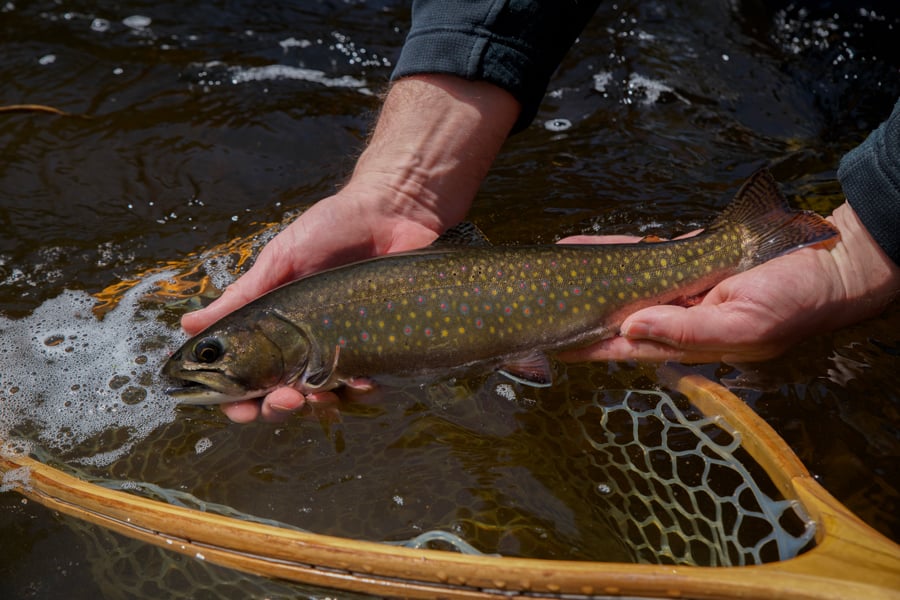
Traces of the harmful chemical have actually been discovered in brook trout years after DDT was prohibited. Picture: Charles Hildick-Smith
The perseverance of chemicals in the environment is a prevalent issue amongst biologists, and a current Canadian research study shows why constant tracking is so essential:
Residues of the insecticide DDT have actually been discovered to continue at “disconcerting rates” in trout even after 70 years, possibly presenting a considerable threat to human beings and wildlife that consume the fish, research study has actually discovered.
Dichlorodiphenyltrichloroethane, called DDT, was utilized on forested land in New Brunswick, Canada, from 1952 to 1968. The scientists discovered traces of it stayed in brook trout in some lakes, frequently at levels 10 times greater than the advised security limit for wildlife.
” DDT is a likely carcinogen that we have not utilized in 70 years here [Canada], yet it’s plentiful in fish and lake mud throughout much of the province at shockingly high levels,” stated Josh Kurek, an associate teacher in ecological modification and water biomonitoring at Mount Allison University in Canada and lead author of the research study.